The Rise of AI in Manufacturing CRM
Why AI is Becoming Essential in Manufacturing CRM
Manufacturers deal with long sales cycles, multiple stakeholders, high-value deals, dealer networks, and after-sales service complexity. AI helps make sense of all this data and turns it into actionable intelligence.
In today’s rapidly evolving landscape of manufacturing, AI is not just an added benefit, but an essential tool. By integrating AI into CRM systems, manufacturers can harness the power of data analytics to uncover hidden patterns and trends that can inform their strategies. For instance, AI can analyze customer feedback from various channels, identify common pain points, and suggest improvements that could lead to enhanced customer satisfaction and loyalty. This proactive approach allows manufacturers to stay ahead of competition and adapt to changing market conditions more effectively.
Manufacturers deal with long sales cycles, multiple stakeholders, high-value deals, dealer networks, and after-sales service complexity. AI helps make sense of all this data and turns it into actionable intelligence.
For example, companies that utilize AI for lead management have reported up to a 30% increase in conversion rates. AI algorithms can analyze vast amounts of data from previous campaigns, allowing sales teams to focus their efforts on leads that are statistically more likely to convert. This intelligent allocation of resources not only maximizes sales efficiency but also enhances the overall effectiveness of marketing strategies.
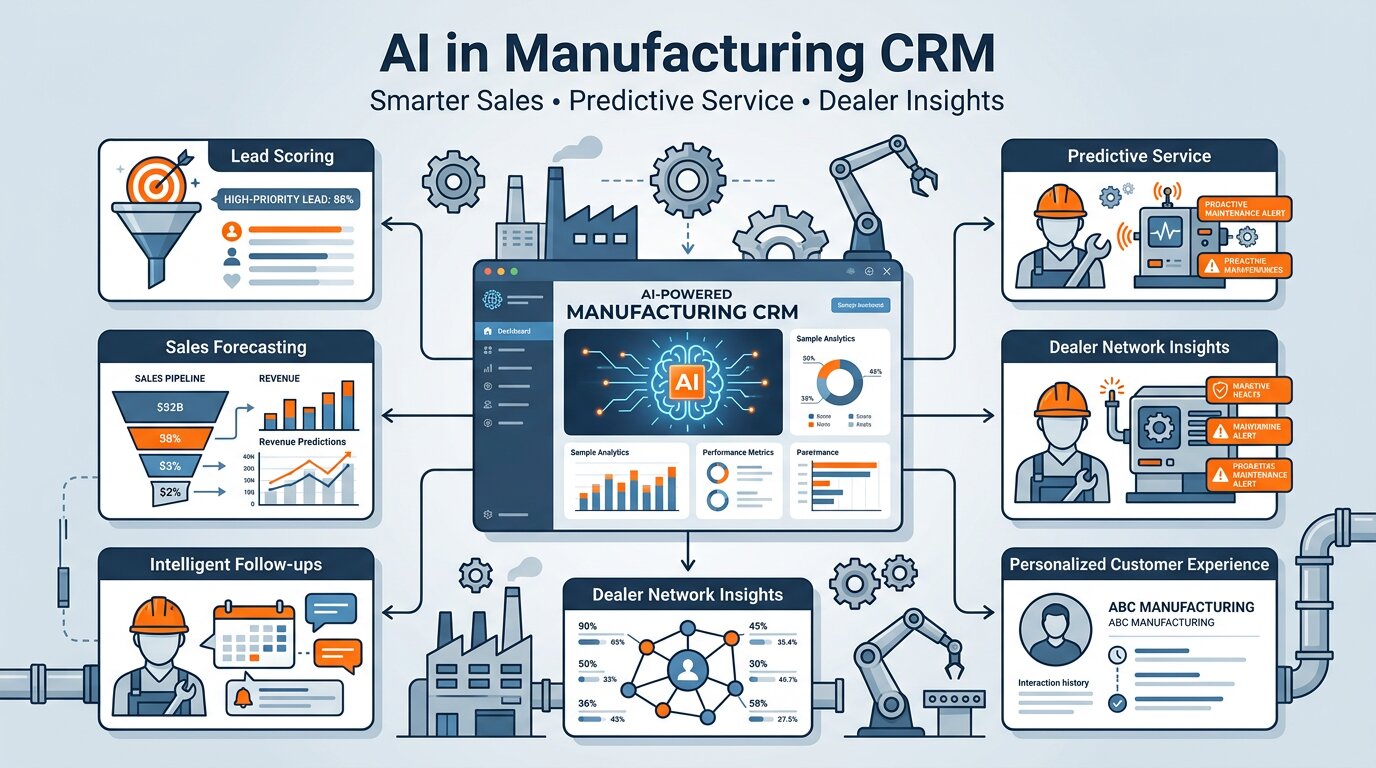
1. Smarter Lead Management & Sales Forecasting
AI analyses historical sales data, enquiry sources, customer behavior, and deal patterns to:
- Predict which leads are most likely to convert
- Score prospects automatically
- Recommend the next best action for sales teams
- Improve sales forecasting accuracy
or machinery and equipment businesses, where each deal is hgh value, this means less guesswork and higher conversion rates.
For machinery and equipment businesses, where each deal is high value, this means less guesswork and higher conversion rates.
2. Intelligent Follow-Ups — No More Missed Opportunities
AI also plays a crucial role in strengthening dealer and channel partner management. By continuously monitoring dealer performance, manufacturers can identify strengths and weaknesses within their distribution network. For example, if certain dealers consistently perform well in specific regions, the manufacturer can leverage that information to replicate successful strategies in underperforming areas.
In manufacturing, delayed follow-ups often mean lost deals. AI-powered CRM systems:
- Detect inactive or stalled leads
- Trigger automated reminders
- Suggest personalized follow-up messages
- Alert managers about leakage in the pipeline
This reduces revenue loss caused by human oversight and ensures every opportunity is tracked and nurtured.
Another significant aspect of AI in manufacturing CRM is the ability to enhance customer experience. By using machine learning algorithms, companies can track customer interactions across various platforms, gaining a 360-degree view of their clientele. This enables personalized communication strategies that resonate better with customers. For instance, AI can suggest tailored marketing messages based on a customer’s previous purchases, preferences, and inquiries, leading to higher engagement rates.
In addition, AI-driven CRM can help in identifying service needs before they arise. For instance, by analyzing machine usage data, a company can forecast when a piece of equipment is likely to require maintenance. This predictive capability not only minimizes unexpected downtime but also allows manufacturers to schedule maintenance at convenient times for their customers, thereby enhancing overall service satisfaction.
To illustrate, consider a manufacturing company that produces industrial equipment. By implementing AI solutions, the company can automate follow-up processes, ensuring that no lead goes unattended. For example, if a potential customer inquired about a specific product but didn’t make a purchase, the system can automatically send follow-up emails with additional information or offers tailored to that product.
Moreover, the rise of AI-driven CRM systems means that manufacturing companies can also leverage predictive analytics. This allows businesses to foresee potential market changes and adjust their sales tactics accordingly. For example, if historical data indicates a spike in demand for a specific type of machinery during a particular season, manufacturers can proactively ramp up production to meet anticipated customer needs.
3. Predictive Service & After-Sales Excellence
After-sales service is a major revenue and reputation driver in manufacturing. AI enhances service CRM by:
- Predicting service needs based on machine history
- Identifying customers at risk of downtime
- Scheduling preventive maintenance
- Prioritizing urgent service requests
The result? Reduced breakdowns, faster service response, and happier customers.
4. Data-Driven Decision Making for Management
AI converts CRM data into insights that leadership can act on:
- Which products are selling faster
- Which regions or dealers perform best
- Where sales cycles are getting delayed
- Which customers are likely to repeat purchase
Instead of relying on reports alone, decision-makers get predictive insights, not just past performance.
5. Stronger Dealer & Channel Partner Management
Manufacturing businesses often depend on dealer networks. AI helps by:
- Tracking dealer performance trends
- Identifying underperforming territories
- Recommending stock planning based on demand
- Improving communication and coordination
6. Personalized Customer Experience at Scale
Furthermore, the utilization of AI in data-driven decision-making empowers management to make informed choices swiftly. AI systems can quickly analyze market trends, sales data, and customer feedback, providing leaders with actionable insights. For example, if sales data from a certain region indicate a decline in performance, management can quickly investigate the cause and implement corrective measures before the situation worsens.
AI studies buying behavior, machine preferences, service history, and communication patterns to:
- Recommend relevant products
- Personalize offers and proposals
- Send timely reminders
- Build long-term customer relationships
In conclusion, the integration of AI in manufacturing CRM is not merely a trend, but a fundamental shift in how businesses operate. As companies embrace these technologies, they can expect to see significant advancements in efficiency, customer satisfaction, and ultimately, profitability. The future of manufacturing is here, powered by artificial intelligence.
Lastly, the pursuit of a personalized customer experience at scale is made possible through AI technologies. Companies can now utilize chatbots and virtual assistants to provide immediate responses to customer inquiries, available 24/7. This not only improves customer satisfaction but also allows human agents to focus on more complex issues, ultimately leading to more efficient operations.