Machinery CRM Software: Why Generic Tools Fail Machinery and Engineering Businesses
Quick Answer
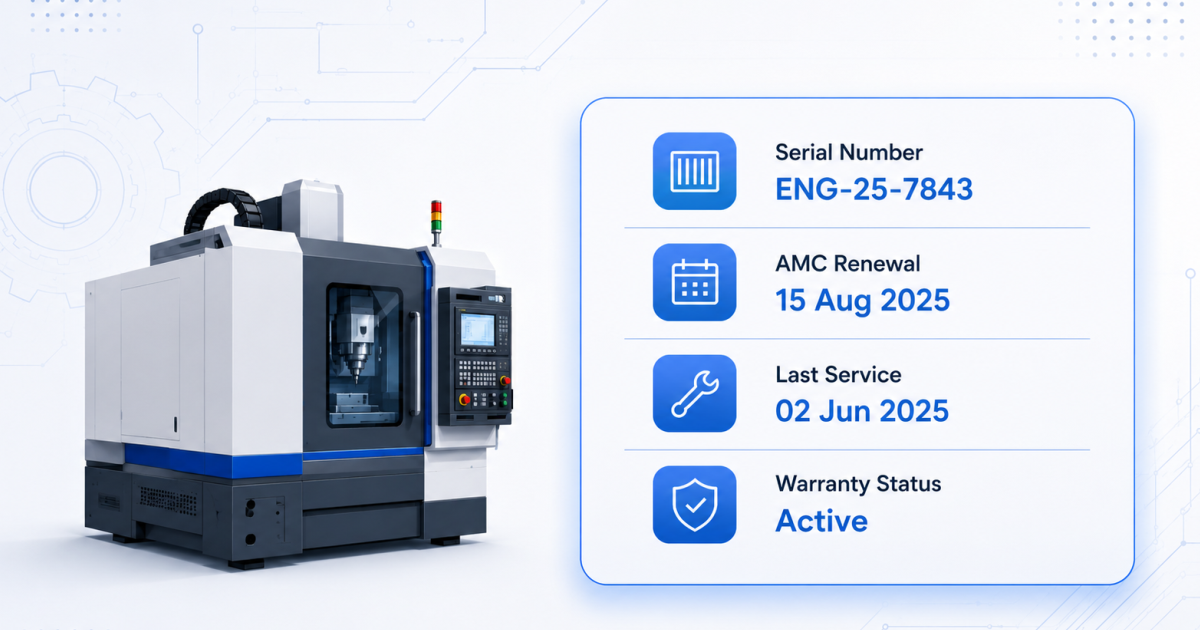
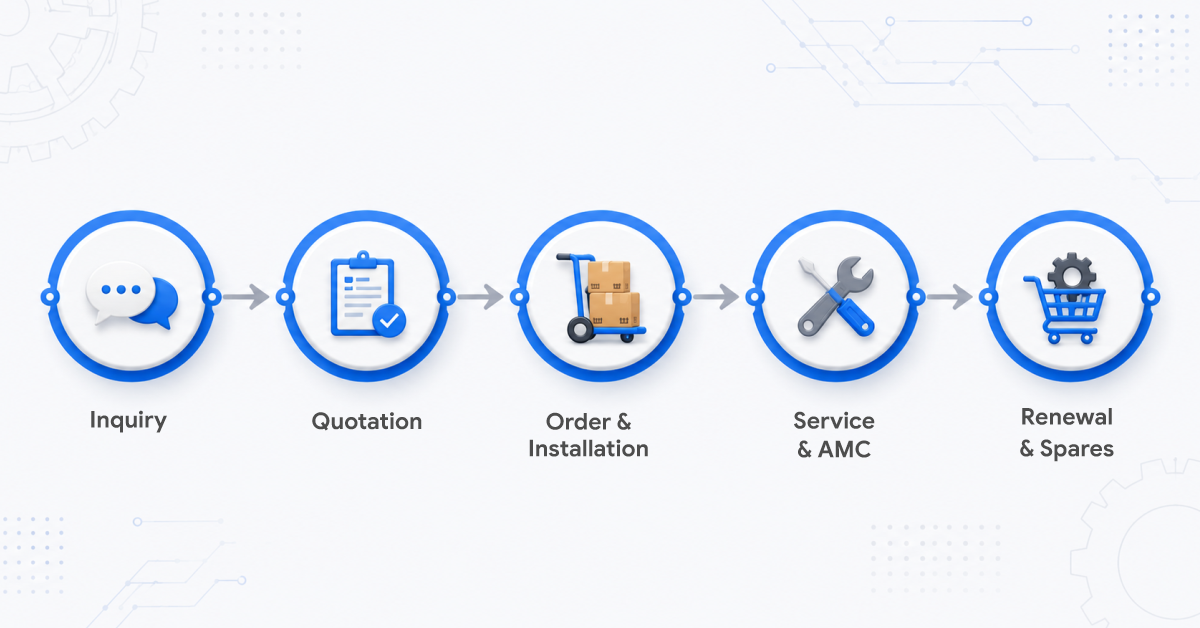
Machinery CRM software is built specifically for businesses that sell, install, service, and maintain industrial equipment. Unlike generic CRMs, it tracks the full machine lifecycle: inquiry, quotation, order, installation, service, AMC, spares, and installed base history — all linked to the machine serial number. For machinery businesses running on Excel and a generic CRM that was never built for them, this is where service revenue, dealer visibility, and customer trust quietly leak away.
Why Most Machinery CRM Software Choices Go Wrong
The sales head at a pump manufacturer pulls up the company CRM at the end of the quarter. Pipeline numbers look fine. Open deals are tracked. Account names are correct. Then the MD asks one question: “How many of our installed machines are due for service or AMC renewal in the next 90 days?” The CRM has no answer. The data is somewhere else — in a separate Excel sheet, in the service team’s WhatsApp groups, in the head of the installation engineer. This is the moment every machinery business realises generic CRMs were never built for what they actually do — and why machinery CRM software is a different category, not just a different brand.
Generic CRMs are built for software sales, B2B services, and consumer products. They handle leads and pipelines well. They do not handle machines. They do not link a customer to a serial number. They do not track installation date, warranty period, AMC contract status, service visits, and spare parts together. Machinery businesses need all of this in one connected system — not the generic CRM bolted onto five spreadsheets.
This is not a workflow inconvenience. It is the difference between a machinery business that grows service revenue predictably and one that loses it without noticing.
Five Things a Machinery CRM Handles That Generic CRMs Do Not
Generic CRMs were not designed for the machinery business reality. These are the five points where the gap shows up — every machinery business with more than fifty installed machines will recognise at least three of them.
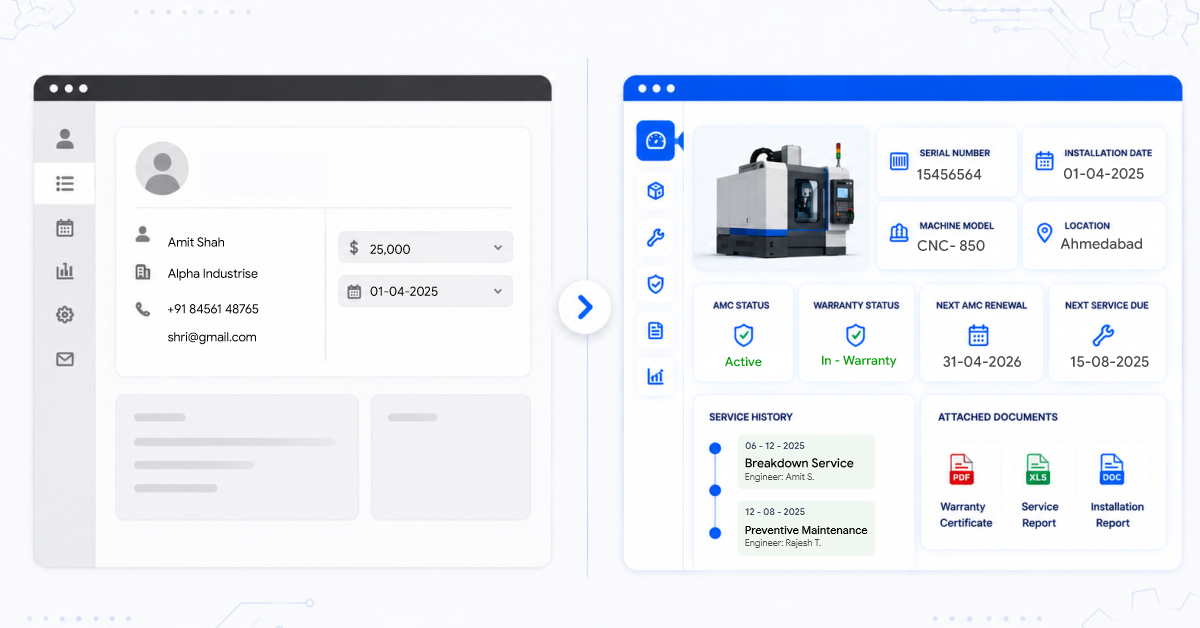
- Machine-level customer records, not contact-level. A machinery customer is not one record. It is one customer with five, ten, or fifty machines — each with its own installation date, warranty terms, AMC contract, and service history. Generic CRMs store customers as contacts. Machinery CRM software stores the machine as the central record, with the customer attached to it.
- Quotation workflows that handle equipment complexity. A machinery quotation is rarely a single SKU. It is a base unit, optional add-ons, installation services, warranty terms, and AMC pricing — assembled together with multiple approval layers. Generic CRMs handle quotations as line items. Machinery CRM software handles quotations as machine configurations.
- AMC and warranty tracking linked to the installed base. Most machinery businesses lose AMC renewal revenue not because customers refuse to renew, but because nobody flagged the renewal in time. Generic CRMs do not track AMC contracts against specific machines. Machinery CRM software does — every contract is tied to a serial number, with automated alerts before expiry. (See our deep-dive on AMC renewal leakage for the full workflow.)
- Service ticket history connected to sales and AMC. When a field engineer closes a service visit, that visit should update the machine record, inform the AMC team, and give the sales team context for the next conversation. In generic CRMs, service is a separate module if it exists at all. In machinery CRM software, service, sales, and AMC share the same machine record.
- Dealer and channel network visibility. Machinery businesses with dealer networks need to see what dealers are quoting, what they have installed, and what service issues they are managing — without forcing dealers to use a separate system. Generic CRMs do not handle dealer-managed customers cleanly. Machinery CRM software treats the dealer network as part of the sales and service workflow, not a blind spot.
Running your machinery business on a generic CRM plus spreadsheets?
Talk to our team about EngiFlow360 — machinery CRM software built specifically for machinery and engineering businesses. We will walk you through the workflow before you commit to anything.
What Changes When Machinery Businesses Move to Purpose-Built CRM Software
This is not a question of features. It is a question of structure. When a machinery business moves from a generic CRM to machinery CRM software built for the industry, four things change at the workflow level.
- Every machine has a record, not just every customer. The installed base becomes searchable, sortable, and visible. Service teams find the right machine in seconds, not minutes. Sales teams can see exactly what each customer owns, what is under warranty, and what AMC contracts are active.
- The quotation, order, installation, and service journey runs in one system. The same record carries the customer from first inquiry to twentieth service visit. Information is not re-entered. Handovers between sales and service do not lose context. The customer never repeats the same information twice.
- AMC renewals stop slipping. Every contract is linked to a machine, with automated alerts before expiry. The system owns the reminder, not a person. Service revenue becomes more predictable — and the MD can see the recurring revenue pipeline the same way they see the sales pipeline.
- Dealer network operations become visible. Dealers work in the same system. Their quotations, installations, and service activity feed into the same machinery CRM software the head office uses. The blind spot in dealer-managed customers closes.
What Changes When Machinery Businesses Move to Purpose-Built CRM Software
How EngiFlow360 Approaches Machinery CRM Software
EngiFlow360 is machinery CRM software built specifically for machinery, equipment, and engineering businesses. It is not a generic CRM with a machinery template applied on top. The machine record is the central object in the system — not the contact, not the deal. Every customer interaction, quotation, service visit, AMC contract, and spare part request is linked to a specific machine.
For machinery businesses operating across India — from Gujarat and Maharashtra to Tamil Nadu and the NCR — EngiFlow360 handles the operational reality of the segment: WhatsApp follow-ups that need to enter the system, field engineers logging service from their mobiles, dealer networks coordinating across cities, and management asking for installed base reports without three days of manual data assembly.
For machinery businesses currently running a generic CRM plus four Excel sheets, the transition to a purpose-built system takes around fifteen to thirty days for standard workflows when machine records, AMC data, and user access are prepared. Service and sales teams are trained on the workflow before go-live. The installed base data migrates into the system cleanly.
See EngiFlow360 configured for machinery operations
A 30-minute walkthrough with our team in Ahmedabad. We show you the machine record, AMC tracking, service ticket workflow, and dealer view — configured for a business like yours.
The Business Case for Choosing Machinery CRM Software
For machinery businesses, the choice between a generic CRM and machinery CRM software comes down to a simple question: should the CRM be built around your customers, or around the machines you sell to them? Generic CRMs choose the customer view because their other markets demand it. Machinery CRM software chooses the machine view because that is where service revenue, warranty obligations, AMC contracts, and dealer activity actually live.
The cost of staying on a generic CRM is not the licence fee. It is the AMC renewal that slipped because nobody could see it. The service complaint that escalated because the field engineer did not know the machine was under warranty. The dealer who quoted the same customer separately because there was no shared view. The MD who could not answer a basic installed base question on a Monday morning.
Machinery businesses that move to purpose-built machinery CRM software make these problems structural rather than dependent on individual memory. The system catches what people miss. That is the actual difference.
EngiFlow360 is machinery CRM software built for the way machinery businesses actually work.
Request your 15-day pilot — our team in Ahmedabad configures the machine lifecycle workflow before you go live. No commitment required during the pilot.